Vintage Gate
First Impressions: A Classic with Character
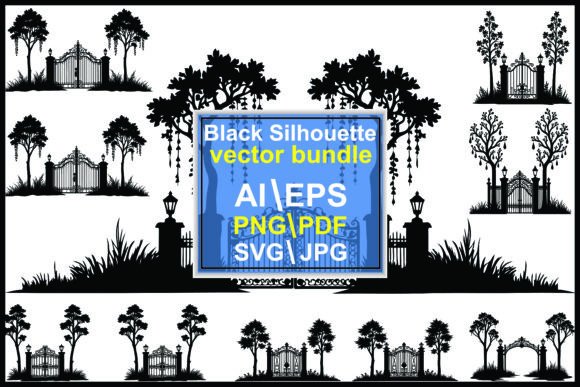
The Vintage Gate design immediately evokes a sense of elegance and timeless charm. With its black silhouette of ornate wrought iron gates, trees, and landscape elements, it feels like a piece that could have been pulled from the pages of an old estate’s history book. The intricate details of the gate, the subtle texture of the metal, and the careful balance between negative and positive space give it a strong visual personality. It’s not just a decorative element—it’s a story waiting to be stitched into fabric.
Designing for Real Projects: What Works and What Needs Attention
As a designer evaluating this machine embroidery design, I consider how well it translates from screen to fabric. The Vintage Gate has a clean layout that allows for easy placement on a variety of products. Its symmetrical composition makes it ideal for items like tote bag design, sweatshirt embroidery, or even custom apparel. However, there are some considerations to keep in mind before using it in real projects.
Real-Life Scenario: Embroidering a Custom Tote Bag
Imagine you're preparing a custom tote bag for a client who wants a vintage-inspired look. You place the Vintage Gate design on the front panel. At first glance, it looks striking—bold, detailed, and rich in character. But as you begin testing, you notice that the dense stitch areas might cause issues on thinner fabrics or when using smaller hoop sizes. This is where practical judgment comes into play.
Performance in Real-World Embroidery Situations
The Vintage Gate is versatile but not without limitations. It performs best on medium to heavy-weight fabrics like denim, canvas, or cotton blends. On stretchy or thin materials, the design may lose clarity or become distorted. For instance, if you were to use it on a baby embroidery project, the delicate fabric might not hold up well under the density of the stitches. In such cases, adding a proper stabilizer becomes essential.
On the flip side, the Vintage Gate shines on items like holiday embroidery or wedding gifts. Its classic aesthetic fits well with seasonal themes and special occasions. When applied to a pillow cover or tea towel, it adds a touch of sophistication that can elevate the product’s appeal.
Where to Use the Vintage Gate Design Carefully
- Small Hoop Sizes: The intricate details of the Vintage Gate may not render well in smaller hoops, especially if the design includes dense stitch areas.
- Textured Fabrics: While the design works on smooth surfaces, it may lose definition on highly textured materials.
- Dark Fabric: Although the design is black and white, the contrast can sometimes be less effective on very dark backgrounds.
- Layered Garments: The Vintage Gate is best suited for single-layer items. Using it on layered garments may lead to stitching overlap or misalignment.
- Curved Surfaces: Applying it to curved surfaces like caps or aprons requires extra care to maintain the integrity of the design.
- Detail Corners: The fine lines and corners of the gate may need additional attention during the embroidery process to ensure they remain crisp.
Impact on Visual Appeal and Product Value
The Vintage Gate has a strong visual impact, especially when used on products like handmade products or personalized gifts. Its classic theme appeals to a wide audience, making it suitable for both Etsy sellers and small shop products. However, the design's complexity means it should be used thoughtfully to avoid overwhelming the final product.
From a customer perspective, the Vintage Gate can enhance the perceived value of a finished product. It adds a level of craftsmanship and detail that resonates with buyers looking for unique, handcrafted items. That said, it’s important to ensure the design remains clear and readable after stitching, especially on items that will be washed frequently, like blankets or kitchen towels.
Practical Designer Notes for Using the Vintage Gate
Before using the Vintage Gate in a commercial or personal project, consider these tips:
- Test on Scrap Fabric: Always test the design on scrap fabric to assess stitch clarity and overall appearance.
- Check Thread Color Contrast: Ensure the thread colors provide enough contrast against the background fabric.
- Review Stitch Density: High-density areas may require adjustments to prevent puckering or distortion.
- Confirm Hoop Size: Choose a hoop size that accommodates the design without stretching or distorting the stitches.
- Inspect Small Details: Pay close attention to the fine lines and corners of the gate to ensure they remain sharp.
- Test in Black and White Mockups: This helps identify any potential visibility issues on dark or light fabrics.
- Use Proper Stabilizer: Especially on stretchy or thin fabrics, a good stabilizer is crucial for maintaining design integrity.
- Confirm Licensing: If you plan to sell finished items or digital products, make sure you have the appropriate license for the embroidery file.
Final Thoughts on the Vintage Gate Design
The Vintage Gate is a powerful design asset that can elevate a wide range of embroidery projects. Whether you’re creating custom apparel, personalized gifts, or commercial embroidery, its classic aesthetic and detailed craftsmanship make it a valuable addition to your creative toolkit. Just remember to approach it with care, especially when working with small hoop sizes, thin fabrics, or curved surfaces. With the right preparation and attention to detail, the Vintage Gate can become a standout feature in your next handmade product or digital embroidery file.