Decorative Line SVG Bundle
First Impressions: Clean, Calm, and Quietly Confident
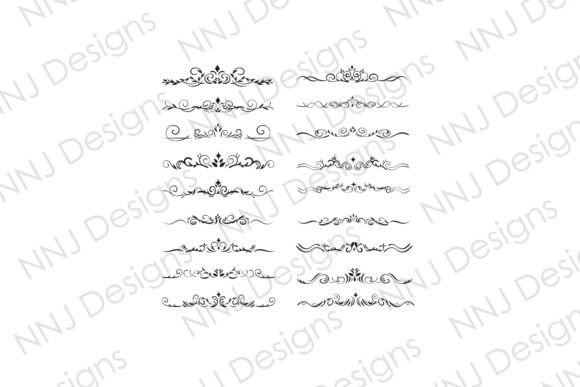
Opening the Decorative Line SVG Bundle feels like stepping into a well-lit studio—no clutter, no noise, just intentional lines. These aren’t fussy flourishes or overworked motifs. They’re minimalist yet expressive: subtle curves, balanced asymmetry, rhythmic spacing, and consistent stroke weight. The mood is serene but not sterile—elegant without being stiff, modern without losing warmth. As an embroidery designer who’s stitched hundreds of borders for baby onesies, boutique tea towels, and custom aprons, I immediately recognized what this bundle *does*: it frames intention. It doesn’t shout. It holds space.
Real-World Use: That Tote Bag Moment
Last week, I was prepping a limited-run embroidered tote bag for a local florist—linen-cotton blend, medium weight, natural undyed base. The client wanted “something delicate but legible at arm’s length”—no logos, no words, just presence. I pulled three designs from the Decorative Line SVG Bundle: one scalloped divider, one tapered bracket, and one continuous wave motif. All scaled cleanly to 3.2" wide. What stood out wasn’t just how they looked on screen—but how they translated *off* the machine. The lines stayed crisp. No feathering. No skipped stitches on the curve transitions. Even with a lightweight tear-away stabilizer (and no cutaway), the running-stitch-based elements held their shape across the slightly textured fabric surface. Customers later told the florist, “It feels handmade—not mass-produced.” That’s the quiet power of restraint done right.
Where It Shines (and Where to Pause)
The Decorative Line SVG Bundle excels in projects where subtlety elevates perception: personalized baby embroidery on organic cotton swaddles, minimalist sweatshirt embroidery along the cuff or hem, embroidered patches for denim jackets, or delicate framing on pillow covers meant for nursery decor. It works beautifully for holiday embroidery—think thin evergreen branches wrapping a monogram on a linen stocking—or wedding gifts like hand-stitched kitchen towels with a single linear motif near the corner.
But—and this matters—its elegance depends on context. On stretchy fabrics like jersey or thin knits? Proceed with caution. These designs rely on clean line integrity; too much give in the substrate can blur definition, especially in tighter corners or tapered ends. On dark fabric, contrast becomes critical: a light thread may vanish unless you test stitch density and consider a slight underlay or denser satin stitch variant. And on curved surfaces—like structured caps or tapered apron pockets—the simplest-looking line can distort if not digitized with gentle contour compensation. I always reposition or simplify before hooping.
What It Adds to Your Finished Product
Visual appeal isn’t just about prettiness—it’s about clarity, consistency, and calm confidence. A well-placed decorative line from this bundle signals care. It tells your customer, “This wasn’t slapped on. It was chosen.” That lifts perceived value instantly—especially for Etsy sellers pricing handmade product at $45+ or small shop owners building boutique branding. It supports brand consistency without locking you into a single style: rotate motifs seasonally (a soft zigzag for spring, a gentle arc for winter), keep typography minimal, and let the line do the work. For personalized gifts? It adds polish without overshadowing names or dates. For commercial embroidery shops? It’s reliable repeatable asset—no color matching headaches, no complex layering, no dense fill areas that snag threads or wear poorly after washing.
Practical Designer Notes You’ll Actually Use
- Always test on scrap fabric first—especially with your exact stabilizer combo and thread brand. Linen behaves differently than quilting cotton, which behaves differently than French terry.
- Check thread color contrast in natural light *and* on-camera. A charcoal grey line on oatmeal fabric might read as “neutral” in person but disappear in your Etsy listing mockup.
- Review stitch density before sending to the machine. Too sparse? Lines look broken. Too dense? Fabric puckers, especially on lightweight materials.
- Confirm hoop size compatibility. Some motifs stretch elegantly across a 5x7 hoop—but shrink poorly below 3". Know your smallest viable use case.
- Inspect small details at 200% zoom. Does the taper end cleanly? Are anchor points stable? One stray node can cause a jump stitch mid-line.
- Test black-and-white mockups. If it reads clearly without color, it’ll hold up across fabric types and lighting conditions.
- Compare light and dark backgrounds using real fabric swatches—not just screen previews.
- Use proper stabilizer: lightweight cutaway for knits, tear-away for stable wovens, fusible for sheer layers. Don’t assume “one size fits all.”
- Verify licensing before selling finished items or digital embroidery files. This Decorative Line SVG Bundle is categorized as Illustrations and Graphics—confirm whether commercial use is included, especially for resale or digital product bundles.
Final Thought: Less Is Anchored Here
In a market flooded with ornate, high-density, “more-is-more” embroidery files, the Decorative Line SVG Bundle stands out by doing less—and doing it with precision. It’s not background noise. It’s thoughtful punctuation. Whether you’re stitching a custom embroidered patch for a craft fair, designing a cohesive line of small shop merchandise, or preparing printable mockups for client approval, this bundle delivers clarity, consistency, and quiet professionalism. It won’t solve every design problem—but for borders, dividers, frames, and decorative accents? It’s the kind of tool you reach for again and again, not because it’s flashy, but because it *works*. And in embroidery—where time, thread, and trust are all finite—it’s the working tools that earn repeat customers, five-star reviews, and shelf space in someone’s home.